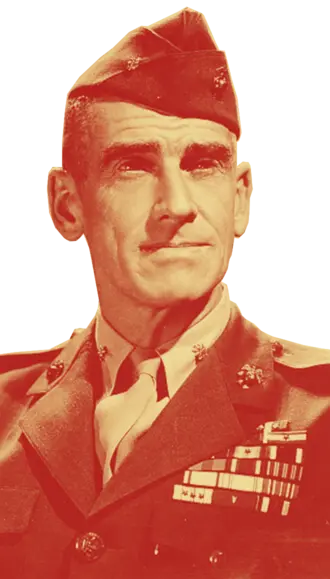

The past two years have been eventful for my page, marked by the articles I’ve published on a multitude of geopolitical topics and the interviews I’ve conducted with leading anti-imperialist voices. While conducting my interviews, I spoke with one of my biggest influences on my writing, whose work I’ve cited on multiple occasions. The following is an interview with Scott Ritter.
Scott Ritter is a geopolitical expert who has gained much experience with a multitude of subjects through a long and impressive record as a United States Marine Corps intelligence officer, weapons inspector, and eventual voice for peace. His activism has led him into the crosshairs of the establishment. In recent years, he has re-entered the public eye for his commentary on the conflicts in Ukraine and Gaza.
When asked what caused him to join the Marine Corps as an intelligence officer, Ritter said, “What led me to join the Marine Corps is the same thing that led me to enlist in the Army out of high school at the age of seventeen. Patriotism, an undying love for my country.” Ritter then described how growing up the son of an Air Force officer during the Cold War influenced him to join the Army. Ritter then described how the issues plaguing the Army at the time that he witnessed discouraged him from seeking admission to West Point and instead led him to pursue a career as an intelligence officer in the United States Marine Corps, inspired in large part by the discipline and pride demonstrated by the Marines.
When asked how he, as an intelligence officer, was selected to participate in the on-site inspections at Votkinsk in the Soviet Union under the provisions of the Intermediate-Range Nuclear Forces Treaty, Ritter stated that as a lieutenant in the 5th Battalion, 11th Marines, he developed a good reputation for the innovations he was implementing as a junior-grade officer. He was about to be assigned to the 11th Marine Amphibious Unit (Special Operations Capable) when Ritter’s battalion commander called his monitor to tell him that he should not be wasted on the Fleet Marine Force and that Ritter should instead be working at the national level. In the midst of all of this, President Reagan signed the Intermediate-Range Nuclear Forces Treaty, and the Department of Defense established the On-Site Inspection Agency, which Ritter was assigned to due to his previous studies in Russian language and culture and due to his abilities as an analyst, to be led by Brigadier General Roland Lajoie, who previously commanded the United States Military Liaison Mission in East Germany.
When asked if his work with the On-Site Inspection Agency played a factor in being selected for General Norman Schwarzkopf’s staff for the hunt to destroy Iraq’s mobile Scud missile launchers during the Persian Gulf War, Ritter answered that it was a factor, but not the main reason for his being selected. As he tells it, Ritter was tasked with helping General Walter Boomer’s two division assault using a simulation computer and the order of battle, among other factors. The improvements he made to the plans impressed General Boomer so much that he was handpicked for General Boomer’s staff in Riyadh, Saudi Arabia, only to discover upon arrival in Riyadh that he didn’t have written orders to General Boomer’s staff. However, Ritter was soon given a billet as a battle damage assessment officer and, while in this position, he was tasked with tracking Iraqi mobile Scud missile launchers due to the expertise he acquired from his experience with missile inspections in Votkinsk.
When asked what he thought of General Schwarzkopf as a boss, Ritter responded, “Never speak ill of the dead.” He explained that Schwarzkopf deserves credit for managing one of the most complex and challenging coalitions ever assembled to win the Persian Gulf War. However, Ritter also noted that he felt Schwarzkopf wasn’t quite as aggressive as he should have been concerning the hunt for the mobile Iraqi Scud missile launchers, while also concluding that Schwarzkopf being more aggressive with the hunt for the Scud launchers wouldn’t have changed the outcome of the war.
On the topic of how his service during the Persian Gulf War led to him joining the United Nations Special Commission (UNSCOM), Ritter said that after he left the Marine Corps in June of 1991, he was invited by his former superior officer from his time in Votkinsk, Colonel Douglas Englund, to work for the United Nations as a weapons inspector in Iraq. Ritter soon went from working as a contracted intelligence officer for UNSCOM to working as an operations officer. By the autumn of 1992, Ritter was planning major weapons inspections in Iraq.
Ritter said that, in addition to Delta Force operators accompanying the inspectors on all of the hunts for Scud missiles, Central Intelligence Agency paramilitary personnel also joined UNSCOM staff on the weapons inspections. This was because the Iraqis were prepared to take the inspectors hostage, and there was a need for inspectors who would respond well under pressure. If the inspectors were to have been taken hostage, the rescue mission was to be given to Delta Force, which had a unit stationed in the Middle East at the time.
Ritter stated that Iraq hadn’t initially been very forthcoming about its weapons of mass destruction program because Iraq viewed its weapons of mass destruction program, or the illusion of one in the aftermath of the Persian Gulf War, as critical to the existential survival of Iraq. It was Iraq’s weapons of mass destruction that broke the will of the Iranian people to continue the Iran-Iraq War and forced Iran to negotiate an end to the conflict, and acted as a deterrent against Israel. Iraq was concerned that the knowledge that it had disarmed itself of its weapons of mass destruction would encourage regional adversaries to engage in acts of aggression against Iraq.
With regard to how he was able to receive assistance from British intelligence to conduct his inspections, Ritter said that the fact that UNSCOM existed under the umbrella of the United Nations meant that it was an international effort. It had a British, Canadian, and Australian component. The British were the first to recognize the symbiotic relationship between the intelligence officers providing actionable intelligence to the inspectors going into Iraq and the inspectors bringing back new intelligence from their inspections, and so the British intelligence component became a useful asset in the inspections.
With respect to the events that culminated in his resignation from UNSCOM, Ritter described how the United States government undermined the inspections by placing CIA personnel in UNSCOM for the purpose of conducting intelligence activities in Iraq. It was also the placement of CIA personnel that led to Iraq accusing Ritter of spying for the CIA. Upon resigning from UNSCOM over the United States government’s undermining of its mission, Ritter was warned of the grudge the United States government would hold against him.
When talking about the famous trip he made to Iraq to warn Iraq of the need to cooperate on arms inspections to avoid being invaded on the eve of the Iraq War, Ritter described how despite the documentary he made to expose the truth about the accusations of Iraq possessing weapons of mass destruction, In Shifting Sands, failing to make a significant impact due to its suppression, he was invested in the issue. When he heard President Bush was meeting with Prime Minister Blair to discuss Iraq, Ritter flew out to meet Deputy Prime Minister of Iraq Tariq Aziz, who was in South Africa for a heart procedure, and Aziz permitted Ritter to go to Baghdad, where he made his speech on international television. Shortly after Ritter’s visit, Saddam Hussein announced that Iraq would let inspectors back into the country without preconditions.
When discussing his arrest in 2001, he said that he has written extensively about the arrest on his Substack and that he encourages those who would like to learn more about it to read about it there. He also stated that he was exonerated in a court of law, and the file was sealed. He then described how the arresting detective, who by December of 2002 was working as a security officer at Siena University, leaked information about the case to the press after Ritter spoke at the university, and the Federal Bureau of Investigation illegally unsealed the file at the request of the press.
On his arrest in 2009, Ritter mentioned that the prosecutor initially wrote in a letter to the judge presiding over the case that if the case was taken to trial using only the evidence from the 2009 arrest itself, a conviction was unlikely. It was after this letter was written that the file from the 2001 arrest was unsealed, so a case could be manufactured against Ritter using cherry-picked aspects of the 2001 and 2009 arrests. Ritter was then offered a plea deal in which, if he pleaded guilty to one felony, he would receive no jail time and would be placed on probation, to which Ritter turned down on the basis that he did not commit the crime for which he was accused, and he was unjustly found guilty and sent to prison.
When asked about what he thinks of a new generation of those promoting peace becoming supporters of his, Ritter responded, “I’m grateful for the support. There’s some important work that I’m trying to do, and we definitely need support. I strive to publish more and make what I publish relevant and informative.”
Scott Ritter’s work can be found on Substack, YouTube, X, where he hosts Ask the Inspector, and the website ustourofduty.org.
Filed under grantkl.substack.com.